This guide is written from a manufacturing perspective for product buyers and developers.
We separate factory finish — surface treatment completed during production before shipment — from end-user care. Factory finishes define the product’s baseline performance. Any maintenance instructions for end consumers are determined by buyers after delivery; we only provide reference guidance.
Bamboo and wood are naturally porous fibrous materials. The fibers swell when absorbing water and shrink as they dry. This inherent property cannot be eliminated by factory surface treatments. Moisture control before finishing is therefore critical: bamboo substrates are controlled to ≤11% moisture content, and wood substrates to ≤10% in our production process.
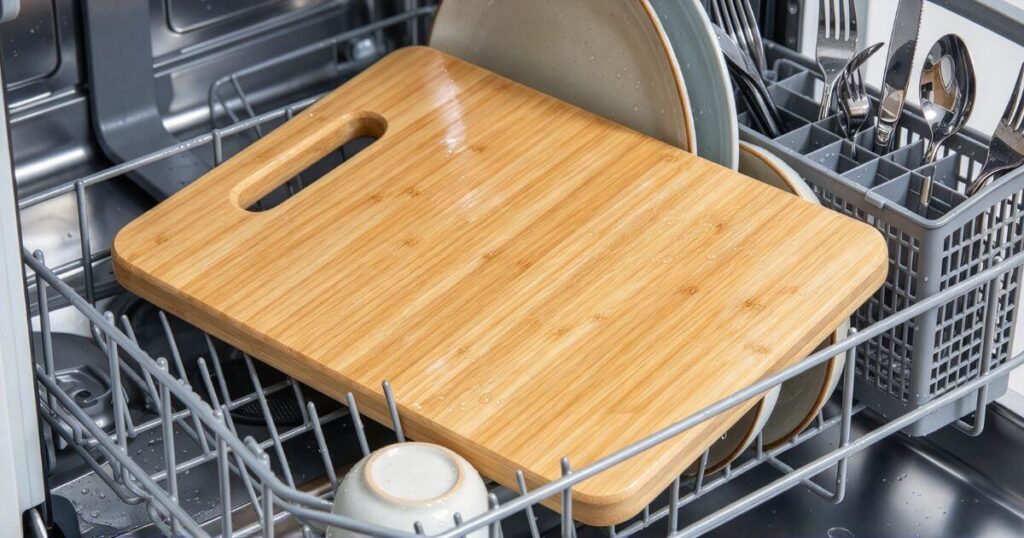
Dishwasher compatibility is not a default configuration. Our standard boards use an eco-friendly adhesive and finish for hand-wash use. For boards specified for household dishwasher use, we select the appropriate water-resistant adhesive and finishing system based on the buyer’s care requirement. The exact adhesive and topcoat grades may differ from our standard hand-wash configuration.
For boards specified for household dishwasher or water-resistant use, we select a water-resistant water-based adhesive formulated to be non-mildew, helping reduce mildew growth starting from the glue lines. This adhesive is not the default for all laminated boards; it is specified when the buyer’s care requirement calls for it.
All film-forming coatings are only applied to the board’s back and edges. The cutting surface remains bare bamboo or wood. Knife contact will chip coated films and create contamination risks.
Two Primary Factory Finishes
1. Wood Wax Oil
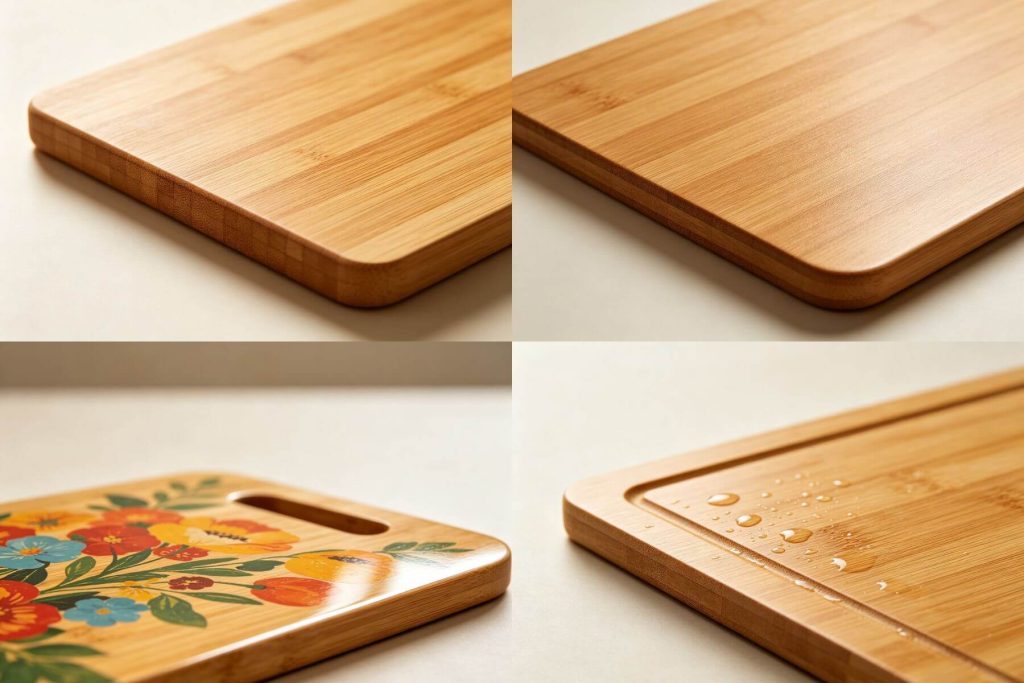
Wood wax oil penetrates mostly into bamboo and wood fibers, rather than building a thick, hard surface film.
Factory production process: sanding → thin application of wood wax oil → resting for full penetration → buffing excess residue off the surface.
This finish preserves the natural texture of the cutting surface. The oil-wax layer will gradually wear away during cleaning.
Dishwasher: No. Hot detergent water strips the oil quickly and accelerates material degradation. Hand-wash only.
2. Water-Based Lacquer: Sealer + Two Topcoats
This water-based lacquer system is our back-and-edge sealing finish, used on both hand-wash and dishwasher-specified boards. It closes bamboo or wood pores and ends with two topcoats; the primer or color-correcting base coat is an additional underlying step, not part of the “two coats” claim. For household dishwasher-specified boards, the finish system is selected together with the water-resistant adhesive to match the buyer’s care requirement. The topcoat grade is selected for the expected wash environment and may differ from the standard hand-wash topcoat.
Bamboo boards: a sealing primer is applied first to close the fiber pores, followed by two topcoats. Bamboo is relatively uniform in color, so no color-correcting step is normally required.
Wood boards such as acacia: a color-correcting base coat is applied first. This base coat also acts as a filler and sealer. The board is then color-sprayed, sanded, and finished with two topcoats. For other wood species, the primer/sealer must be selected according to the wood’s tannin, oil, or absorption characteristics; one wood process does not fit all species.
Critical material limitation: this lacquer system is only applied to the back and edges. The cutting surface remains bare bamboo or wood. While the coated areas withstand typical household dishwasher cycles, the board must never be left soaking in standing water. It is not suitable for commercial dishwashers, where high heat, strong alkaline detergents, and rapid temperature cycling can cause delamination in laminated bamboo boards.
Our bamboo cutting board process has been validated in an internal 100°C / 20-hour environmental test, after which the bamboo board showed no cracking. This is a material and process validation under severe conditions; it is not a warranty for commercial dishwasher use. Household dishwasher use still requires prompt removal after the cycle and no soaking.
If you are looking for a ready dishwasher-safe bamboo cutting board with custom logo and retail packaging, our factory-direct option starts at 500 pcs.
Comparison Table
| Factory Applied Finish | Factory Process Summary | Hand-wash | Dishwasher | Reference on End-User Care |
|---|---|---|---|---|
| Wood wax oil | Penetrating wood wax oil applied during production; no solid film formed | Recommended | No | Oil wears over time; buyers may recommend periodic re-oiling |
| Water-based lacquer: sealer + two topcoats | Sealing primer or color-correcting base coat on back and edges only, followed by two water-based topcoats. Optional, buyer-specified for household dishwasher use. | Excellent | Household only, coated areas only | Coated areas need no oil; bare cutting surface optional oil conditioning |
Dishwasher Safety Boundaries
For boards specified for household dishwasher use, the dishwasher-compatible configuration includes a water-resistant adhesive and back/edge sealing. The dishwasher-safe designation applies only to the coated back and edge areas, not to the bare cutting surface.
The bare bamboo or wood cutting surface cannot be sealed with film-forming lacquer. Knife contact will chip the coating and lead to contamination complaints.
Household dishwashers operate with moderate temperature cycles. Commercial dishwashers combine high heat, strong alkaline detergents, and rapid temperature changes, which can damage bamboo and wood substrates.
Even dishwasher-safe boards need to be removed right after the dishwasher cycle completes. Trapped moisture inside the dishwasher cavity will gradually cause swelling, warping, or delamination. Never leave the board soaking in standing water.
Care Reference
Factory finishes establish the product’s water resistance baseline. Final end-user care instructions are defined by buyers for their own product manuals.
For wood wax oil boards: the penetrating finish will wear over repeated washing. Buyers may recommend periodic oil conditioning for end users.
For water-based lacquer boards with two topcoats: the coated back and edges require no oil conditioning. The bare cutting surface may optionally be conditioned with oil, per the buyer’s requirements.
A universal baseline rule for all bamboo and wood boards: avoid prolonged soaking and dry the board after cleaning.
Common Mistakes
- Assuming a dishwasher-safe factory finish makes bamboo or wood immune to water damage. Coatings slow water absorption, but the substrate still cannot tolerate prolonged soaking.
- Requesting lacquer on the cutting surface. Knife cuts will chip film-forming finishes, leading to contamination complaints.
- Confusing household dishwasher qualification with commercial dishwasher suitability. High heat and strong alkali in commercial dishwashers damage bamboo and wood substrates.
- Treating factory wood wax oil treatment as permanent protection. Wood wax oil wears away gradually with washing.
- Leaving the board inside the dishwasher after cycle completion. Trapped residual moisture causes swelling, warping, or delamination over time.
- Treating “two topcoats” as the total number of coating steps. The primer or color-correcting base coat is an additional underlying step.
- Using one wood-finishing process for all wood species. Acacia, oak, pine, teak, and other woods may require different primer/sealer systems based on tannin, oil, or absorption characteristics.
- Treating an ink, coating, or substrate certificate as a replacement for finished-product migration testing. FDA / LFGB compliance is confirmed on the finished product, not on separate materials.
Selection Summary for Buyers
Choose wood wax oil finish if your target market prefers natural wood or bamboo texture and hand-wash-only use.
Choose the water-based lacquer system with two topcoats when your product needs household dishwasher convenience on the coated back and edges. This configuration is buyer-specified, not the default finish.
For a production-ready dishwasher-safe bamboo cutting board, see our factory-direct product page for specs, customization, and MOQ.
Next Steps
If you are sourcing bamboo or wood cutting boards, tell us your target market, channel, and care expectation. We will recommend the finish that matches your price band and compliance scope.
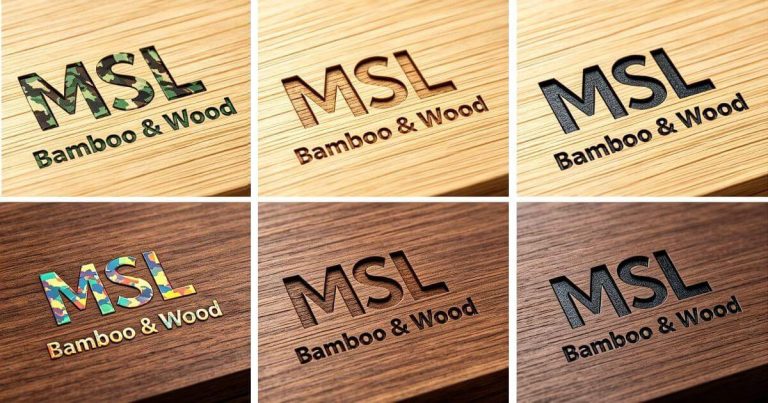
If you also need custom branding for bamboo and wood kitchenware, see our logo customization guide.
Related Reading: What Makes a Supplier Easy to Work With? A Buyer’s Checklist →
FAQ
Can we apply lacquer on the cutting face?
No. Knife cuts will chip film-forming lacquer. Standard manufacturing practice leaves cutting surfaces bare. Factory lacquer is applied only to the back and edges.
What is the difference between factory wood wax oil treatment and end-user oil conditioning?
Factory wood wax oil is the initial penetrating finish applied before packing. It wears away with washing. Whether to add user oil conditioning instructions is decided by buyers.
Does a dishwasher-safe bamboo or wood board require maintenance?
The coated back and edges do not require periodic oil conditioning. Any care guidance for the bare cutting surface is determined by the buyer. Always remove the board promptly after the dishwasher cycle and avoid soaking.
Why do bamboo and wood boards turn white after repeated wetting?
Whitening can appear when moisture penetrates porous bamboo or wood fibers, when surface oil or wax emulsifies after repeated wetting, or when extractives rise to the surface. Proper factory sealing on the back and edges, plus prompt drying, helps reduce this risk.
Does “two coats” mean only two coating steps in total?
No. In this guide, “two coats” refers to two topcoats. The sealing primer for bamboo, or the color-correcting base coat for wood, is an additional underlying step.
Is the water-based lacquer system suitable for commercial dishwashers?
No. It is intended for household dishwasher cycles on the coated back and edges only. Commercial dishwashers use higher heat, stronger alkaline detergents, and rapid temperature cycling, which can damage bamboo and wood substrates.
Is dishwasher compatibility the default finish?
No. Our default finish is wood wax oil for hand-wash use. The water-resistant adhesive and water-based lacquer configuration is buyer-specified for household dishwasher use and is not applied to all laminated boards by default.
Is the water-resistant adhesive used on all laminated boards?
No. It is specified for products requiring water resistance or household dishwasher compatibility. Default laminated boards may use a different adhesive system depending on the buyer’s care requirement.
Is the topcoat the same for hand-wash and dishwasher-specified boards?
No. The topcoat grade may differ. Household dishwasher-specified boards use a topcoat selected for the expected wash environment, while standard hand-wash boards use our standard hand-wash topcoat.