Resin and wood boards have become one of the fastest-growing categories in kitchenware, gifting, and home décor. They photograph well, feel premium, and give brands an easy way to stand out on Amazon, Etsy, and retail shelves.
But behind every beautiful resin board, there is a practical question: can it actually be used for cutting, and is it food-safe?
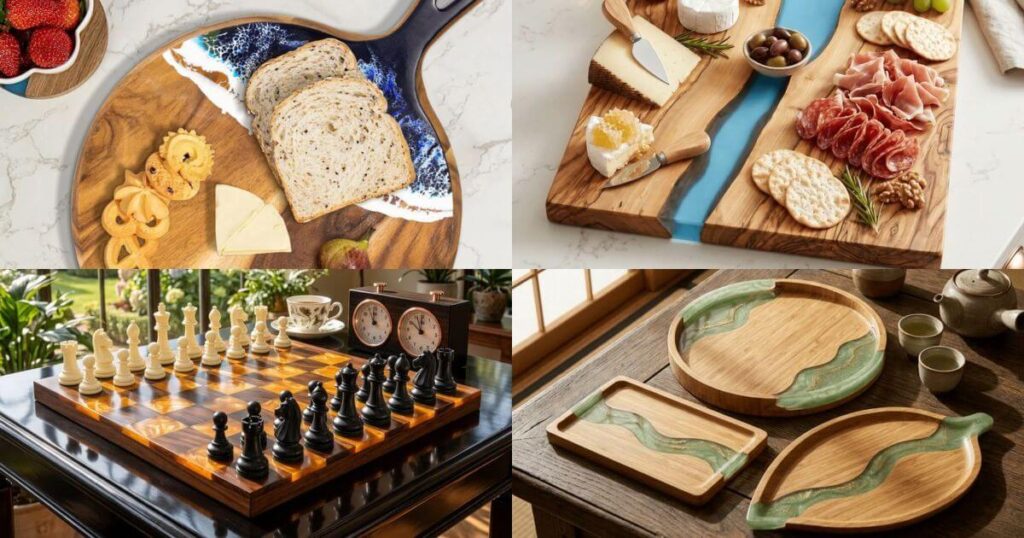
The answer depends on how the resin is built into the wood. First, it is important to note that resin boards are primarily designed for display, presentation, and serving (such as charcuterie and cheese). When cutting is needed, it should be done on the wood area, avoiding the resin. In this guide, we break down four common resin constructions — ocean wave, river, chessboard, and resin inlay — and explain where each one belongs. All four can be produced in bamboo, acacia, walnut, and other wood species.
Quick Comparison
| Style | Resin Coverage | Best Use | Cutting Guidance |
|---|---|---|---|
| Ocean Wave / Resin Lacing | 10–30%, usually edge (slightly raised) | Charcuterie, serving, display | Cut on wood only; avoid resin |
| River / Deep Pour | Center section, flush with wood | Serving, display, presentation | Cut on wood only; avoid resin |
| Chessboard / Resin Overlay | Alternating wood and resin squares, flush, + full clear topcoat | Chessboard, display | Not for cutting |
| Resin Inlay | Routed pattern filled flush with resin, no topcoat | Dual-purpose: wood side for cutting, resin side for display | Cut on wood side; resin is decorative |
All four styles can be finished with a food-safe topcoat. The difference is whether the coating stays intact during normal use. (The same finishing standards apply to our wood resin bowls and custom pepper mills.)
1. Ocean Wave / Resin Lacing
How it is made
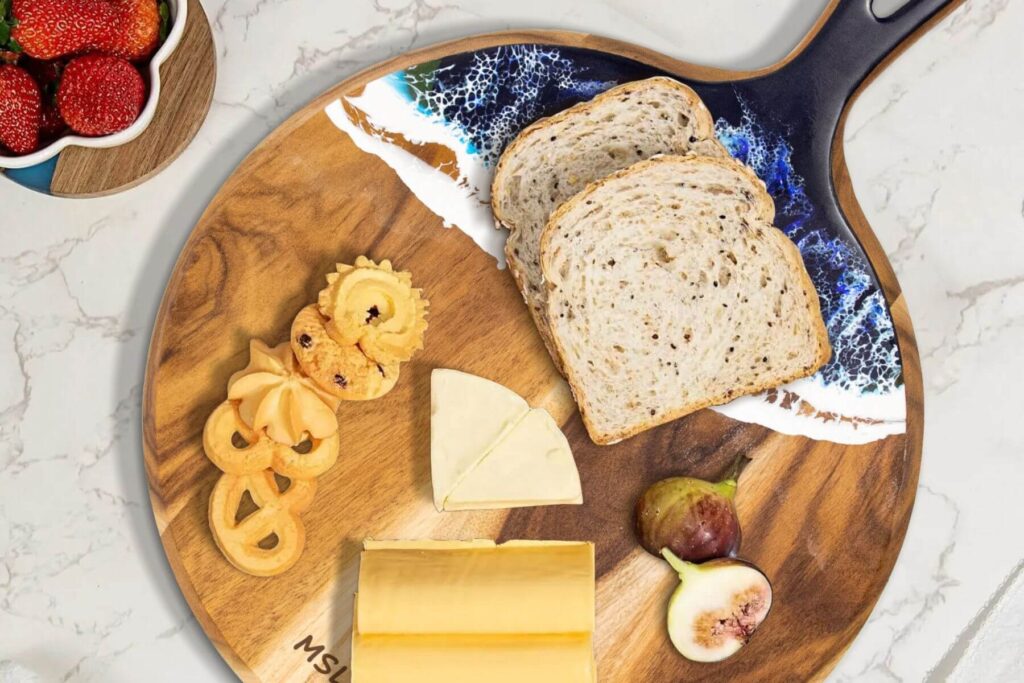
A wood board is prepared, usually with a live edge or a shaped corner. Colored resin — often blue, green, white, or custom Pantone — is poured along the edge or into a selected area. A heat gun is then used to move the white resin and create foam-like cells, mimicking the way seawater breaks on sand.
What it looks like
The resin stays on the edge or one section of the board, creating a slightly raised, textured wave effect. The wood remains the dominant surface. The wave effect is decorative and highly photogenic.
Best use
Ocean wave boards are best positioned as charcuterie boards, serving boards, and gift items. The resin area is purely art and decoration.
Available in bamboo, acacia, walnut, and other wood species.
Food safety
The whole board receives a food-safe topcoat. In normal use, customers use the wood area for food preparation or cutting and naturally avoid the decorative raised resin, so the coating stays intact. This is the correct use case to communicate in your product listing.
2. River / Deep Pour
How it is made
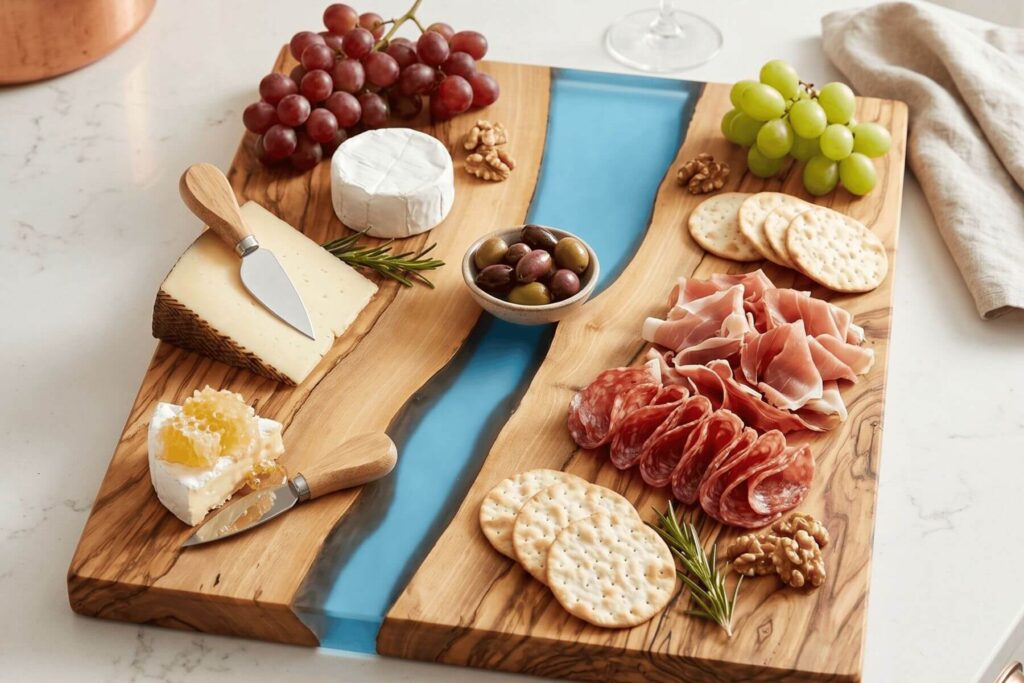
Two pieces of live-edge wood are placed with a gap between them. A mold is built around the gap, and deep-pour resin is poured into the center. After curing, the board is flattened and sanded, so the resin is completely flush with the wood surface. Finally, it is finished with a food-safe oil, wax, or topcoat.
What it looks like
The resin forms a river through the center of the board. It can be clear, translucent, pearlescent, or metallic. Because it is sanded flat, the wood and resin create a single, smooth surface. The wood remains the main structural and cutting area.
Best use
River boards are often the centerpiece of a table. They are typically used as serving boards, cheese boards, and bread boards. They are not designed for heavy chopping directly on the resin surface, as knife marks can scratch the finish. Cutting should be kept to the wood sections.
Available in bamboo, acacia, walnut, and other wood species.
Food safety
With a food-safe resin and a food-safe topcoat, the board can be used for serving and presentation. For markets like the US and EU, we can coordinate FDA or LFGB migration testing on the finished board. The board should be marketed for serving, display, and light food prep on the wood side.
3. Chessboard / Resin Overlay
How it is made
A chessboard has two sides — one is wood, the other is resin. The squares are routed partially into a solid wood board, not cut through. The routed squares are filled with colored resin, sanded flush with the wood, and the wood itself forms the other squares. After flattening, an additional clear resin topcoat is poured over the entire surface for gloss and protection.

What it looks like
Alternating wood and resin squares, like a chessboard, sitting under a clear glossy topcoat. The entire surface is smooth and highly reflective.
Best use
An actual chessboard, or a display piece. Not a cutting board.
Available in bamboo, acacia, walnut, and other wood species.
Food safety
A food-safe topcoat can be applied, but this style is positioned for chess and display. The clear topcoat is not designed for cutting.
4. Resin Inlay
How it is made
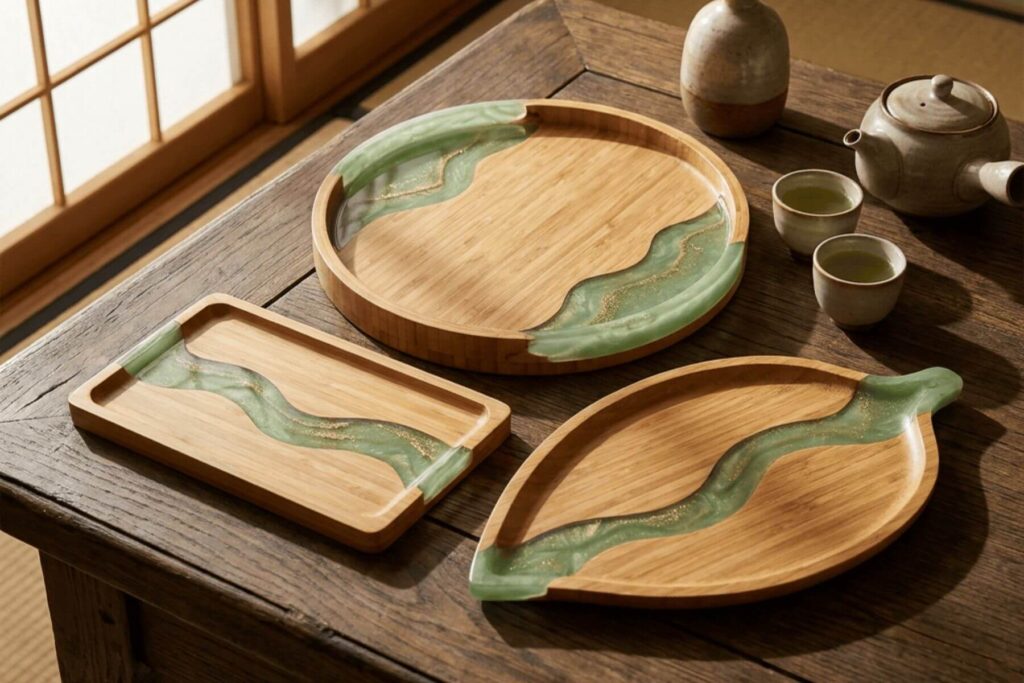
A shallow channel or pattern is routed into a solid wood board. Resin is hand-poured into the routed area. After curing, the board is flattened and finished. The resin is flush with the wood surface. Unlike the chessboard style, no clear topcoat is added.
What it looks like
The resin looks like an inlay or pattern, but it does not go through the board. There is no clear topcoat over the surface, so the wood and resin sit at the same level, maintaining the natural tactile feel of the wood.
Best use
This is the most practical resin construction for brands that want both art and function. The resin face can be used for serving and display, while the reverse side can remain plain wood for cutting. It is also more stable than a through-cut river board.
Available in bamboo, acacia, walnut, and other wood species.
Food safety
The solid wood base reduces the risk of structural separation. With a food-safe finish, this style can be positioned as a dual-purpose serving and cutting board — with the reminder to cut on the wood side, not the resin inlay.
Food Safety and Cutting: What Buyers Need to Know
Fully cured resin is stable, and all four styles can be finished with a food-safe topcoat. The important factor is whether the topcoat remains intact.
- Ocean Wave, River, and Resin Inlay: Customers use the wood area for cutting and avoid the resin, so the food-safe finish stays intact.
- Chessboard / Resin Overlay: The clear topcoat is not designed for cutting. This style is for chess and display.
For this reason, resin boards should be sold with clear usage guidance:
Best for serving, charcuterie, and display. If cutting, use the wood area only and avoid the resin surface.
If your market requires food-contact compliance, work with a manufacturer who can provide food-safe resin, food-safe topcoat, and test reports for FDA, LFGB, or other relevant standards. We can support all three.
How to Choose the Right Resin Style
| Your Goal | Recommended Style |
|---|---|
| Best-selling charcuterie board with strong visuals | Ocean Wave |
| Classic river look for premium gifting | River / Deep Pour |
| A chessboard or display piece | Chessboard / Resin Overlay |
| Dual-purpose board with resin art and wood cutting side | Resin Inlay |
Custom Resin Boards for Your Brand
At MSL Bamboo, we produce bamboo and wood boards with resin inlay, resin coating, and mixed-material construction. We can support:
- Ocean wave, river, chessboard overlay, and resin inlay styles
- Custom shapes and patterns for resin inlay — logo, lettering, geometric, or any design
- Food-safe resin and topcoat options
- Custom colors, logo engraving, and packaging
- Low MOQ private-label programs
- FDA / LFGB test coordination for export markets
If you are developing a resin board line for the US, EU, or another market, send us your idea, target price, and certification requirements. We will recommend the right construction and finish.
Beyond Boards: Matching Resin Kitchenware Sets
In B2B sourcing, buyers rarely purchase just one item. To help you build a cohesive product line, we also manufacture matching resin accessories. The most popular items in our catalog right now include:
- Resin Fruit & Salad Bowls — using the same acacia and olive wood bases with ocean or river resin pours.
- Coaster Sets with Holders — a high-margin add-on for retail. We offer marble-look resin coasters with metal or wood holders.
- Custom Pepper Mills — matching wood and resin spice grinders that pair perfectly with a charcuterie board set.
If you are developing a wedding gift set, a housewarming bundle, or a retail kitchen collection, we can color-match the resin across boards, bowls, and coasters.
Want to see what these styles actually look like as finished products? Browse our resin wood products collection →
FAQ
Are resin and wood boards food-safe?
Yes. All four styles can be finished with a food-safe topcoat. For ocean wave, river, and resin inlay boards, cutting is done on the wood, so the coating stays intact. For chessboard overlay boards, the clear topcoat is not designed for cutting — they are for chess and display.
Can I cut directly on a resin river board?
Light food prep is generally acceptable on the wood area. Avoid heavy chopping on the resin surface, as knife marks can scratch the finish.
Which style is best for Amazon?
Ocean wave and river boards sell well as charcuterie and serving boards. Chessboard overlay boards are a different product — they are chessboards, not kitchen boards.
Can resin inlay be made in custom shapes?
Yes. Resin inlay can be routed into any shape — geometric, logo, lettering, waves, or a custom pattern. The solid wood base adds stability, and the whole board receives a food-safe topcoat.
Do you make resin boards in bamboo?
Yes. Bamboo is one of our core materials. Resin inlay and resin overlay can both be produced on bamboo boards, alongside acacia, walnut, and other species.
Do you provide FDA or LFGB test reports?
We can coordinate testing based on your market and product specification.
Do you offer matching resin coasters, bowls, or trays?
Yes. We manufacture resin fruit bowls, salad bowls, custom serving trays, coaster sets with holders, and pepper mills. We can match the resin color and wood species to your existing cutting board orders.