Logo method is one of the first decisions a retail buyer, sourcing manager, or private-label product manager makes when developing a custom logo cutting board or any private-label bamboo or wood product. It affects unit cost, MOQ, sample lead time, durability, dishwasher compatibility, and how the product looks on a retail shelf — online or in-store.
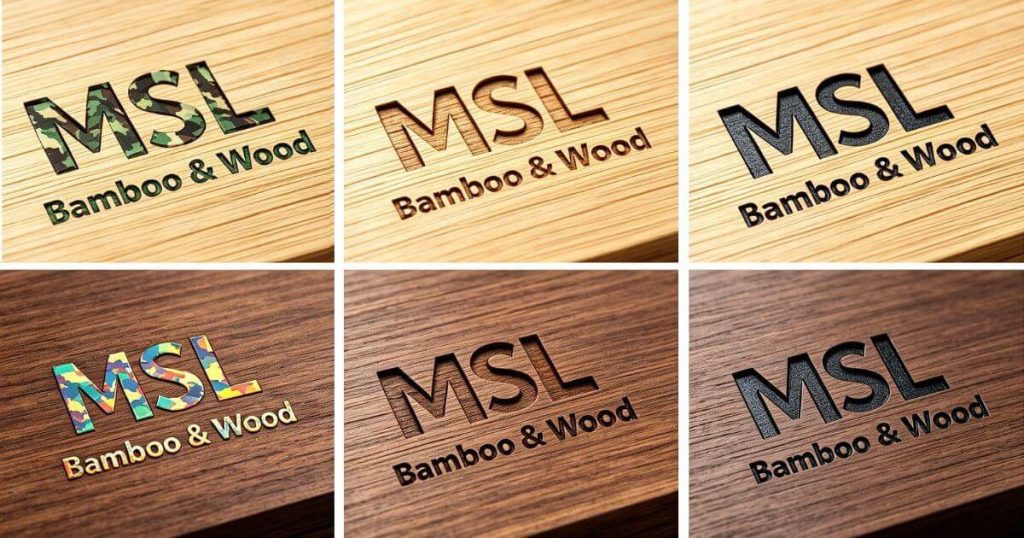
There are three main methods used for custom logo kitchenware: UV printing, laser engraving, and screen printing.
Quick Comparison
| Item | UV Printing | Laser Engraving | Screen Printing |
|---|---|---|---|
| How it works | Ink printed, then UV top coat cured | Physically carved into wood fibers | Ink pressed through a mesh screen |
| Durability | Better suited to hand-wash products | Highly durable | Better suited to hand-wash products |
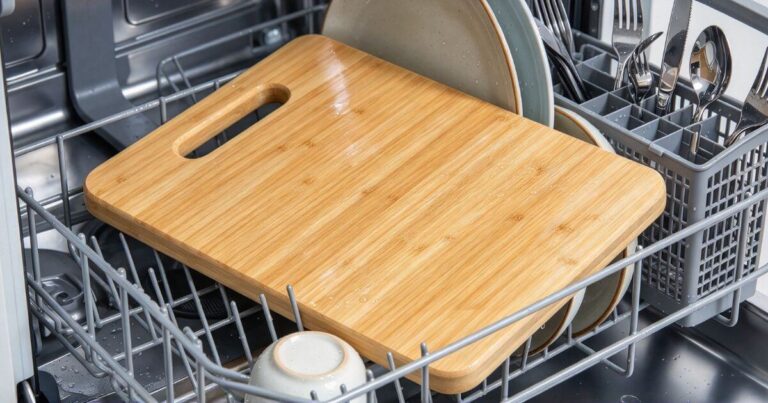
| Dishwasher-safe lines | Not recommended for dishwasher use — batch consistency is difficult to guarantee even after sample validation | Suitable for dishwasher-safe lines | Not recommended for dishwasher use — batch consistency is difficult to guarantee even after sample validation |
| Color patterns | Supported | Not supported, single-color only | Single or few colors |
| MOQ | 500 pcs | 500 pcs | Typical MOQ: 5,000 pcs |
Cost logic: screen printing has the lowest unit cost at high volumes because the screen setup cost is amortized across large runs; laser engraving has no ink consumable and stable unit pricing across quantities; UV printing carries a higher per-unit cost for full-color artwork. Exact pricing depends on product, size, finish, and order quantity.
Not sure which finish or logo method fits your market? Tell us your target market and budget. Our engineering team will review your requirements and reply within 24 hours with a recommended finish and logo method, plus the sample options available for your evaluation. Standard material swatches are free; custom logo samples are quoted separately and can be credited against bulk orders.
👉 Request a Free Sample & Recommendation →
1. UV Printing
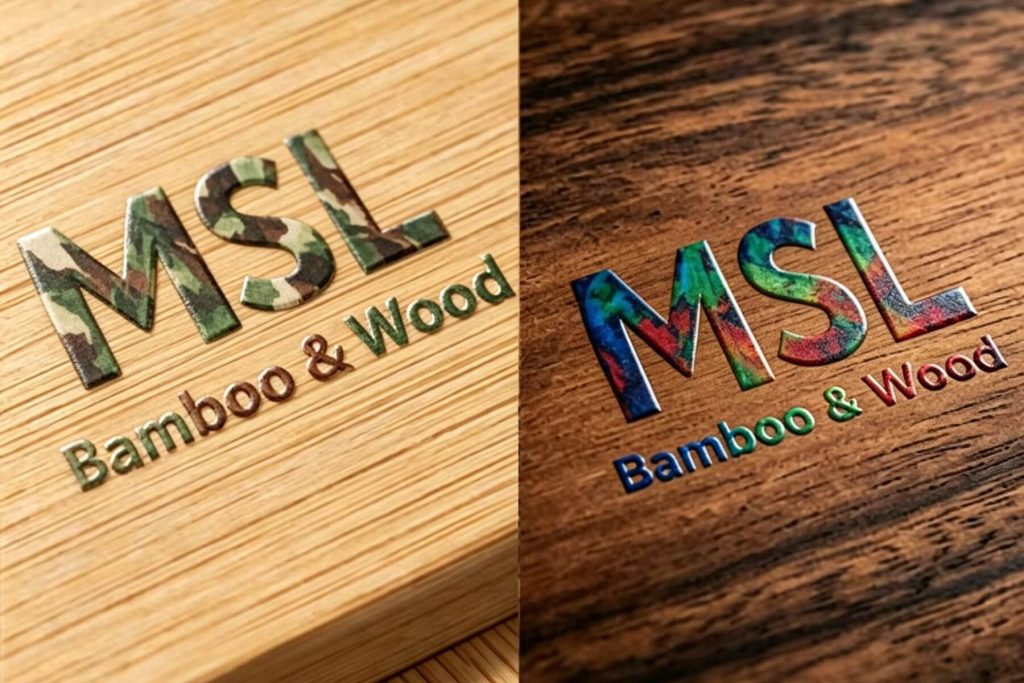
UV printing on wood suits SKUs that need full-color artwork, gradients, or multi-color brand identities. Ink is printed onto the surface, then a UV top coat is cured over it.
The result is a full-color print that can reproduce detailed artwork, gradients, and multi-color brand identities.
UV printing works on UV-coated surfaces or cured water-based clear lacquer. It does not adhere well to an open-grain wood wax oil finish.
UV-printed and UV-coated surfaces are better suited to hand-wash products. Repeated dishwasher heat, moisture, and detergent exposure can affect print and coating durability.
Best for: holiday SKUs, licensed artwork, full-color logos, hand-wash products.
2. Laser Engraving
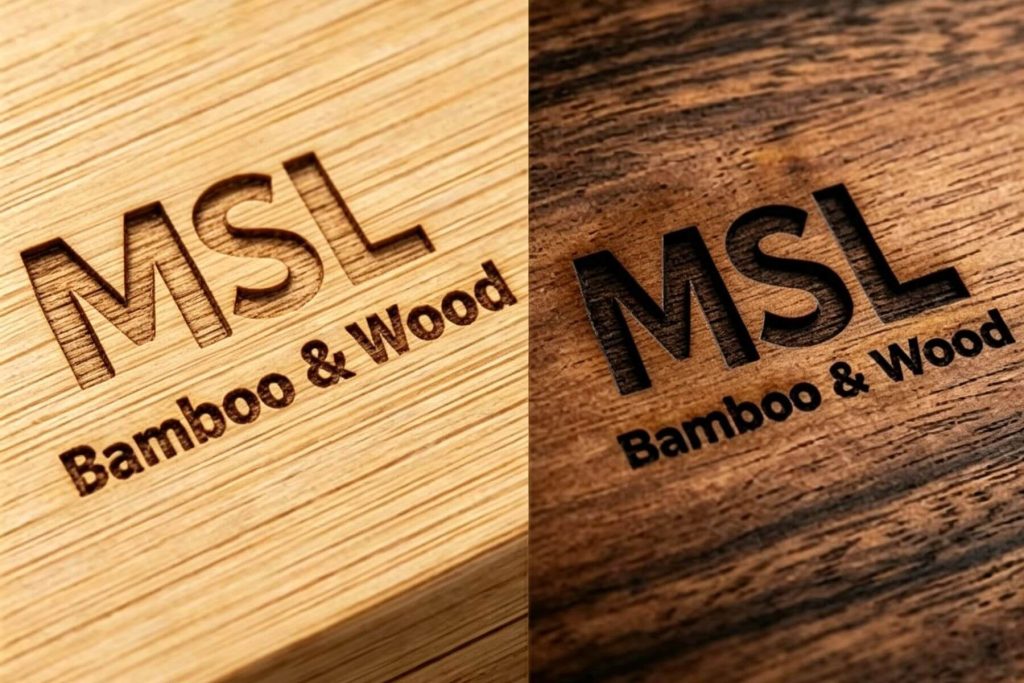
Laser engraving on bamboo and wood physically cuts into the fibers, producing a single-color, clean, highly durable mark. This is one of the most widely adopted methods for a custom engraved cutting board or monogrammed cutting board.
There is no ink or print layer that can peel or fade. The mark is physically engraved into the wood surface.
Laser engraving is highly durable because the mark is cut into the material, not applied on top. It is the preferred choice where a clean, highly durable brand mark matters more than color.
Laser engraving works with all three of our main finish systems. For dishwasher-safe boards, we engrave first and then apply the lacquer, so the coating seals the engraved grooves and prevents water ingress. This is why laser engraving is the recommended logo method for dishwasher-safe cutting boards.
Best for: brand logos, long-term marks, dishwasher-safe lines.
3. Screen Printing
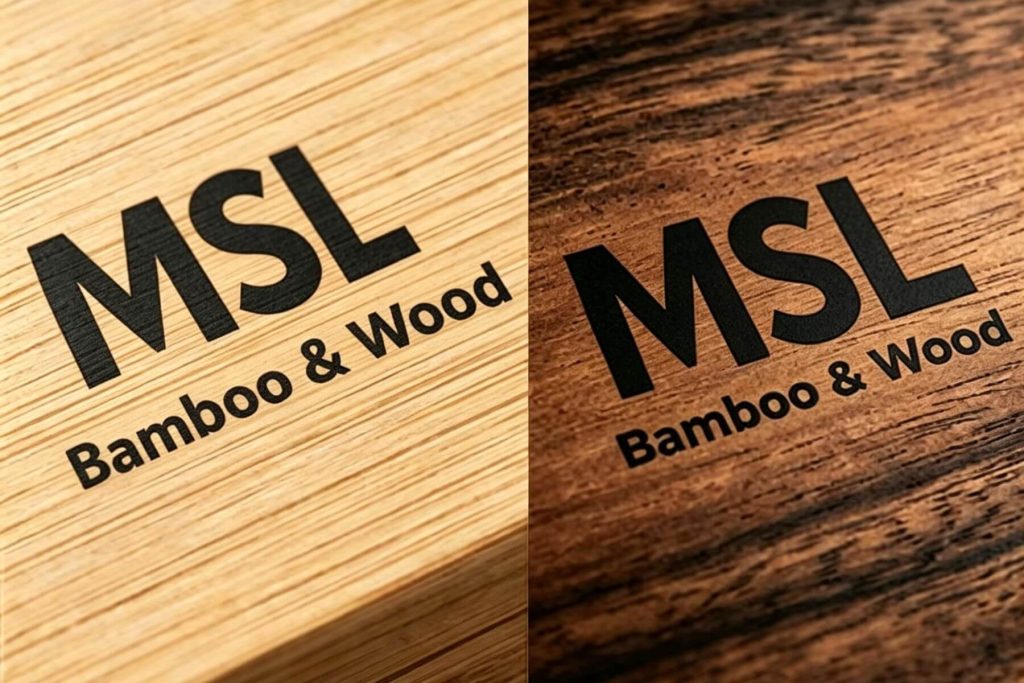
Screen printing wood and bamboo kitchenware suits high-volume, single-color or few-color logos, and generally offers lower per-unit cost at large quantities.
It is the traditional printing method. The ink layer is thicker and provides strong coverage, suitable for simple logo structures.
Screen printing works on fully cured water-based clear lacquer and is suitable for hand-wash products. It delivers solid, high-coverage color for large-volume orders.
Best for: supermarket private-label programs, promotional SKUs, single-color or few-color logos.
Typical MOQ: around 5,000 pcs. Smaller quantities are technically possible with extra screen setup cost, though unit cost rises significantly.
Screen printing ink can wear under repeated dishwasher heat, moisture, and detergent exposure, so it is recommended for hand-wash products only.
Have artwork ready? Tell us your target market and care requirement, and we’ll recommend the right process →
Logo Method vs Finish System
The logo method cannot be chosen in isolation. It has to match the surface finish. The wrong combination leads to poor adhesion, print loss, color shift, or compliance issues. For a full comparison of finish systems, see our finish guide.
UV coating is a special finish formulated for UV ink. There is no dedicated coating for screen printing; screen printing is applied onto fully cured water-based clear lacquer for hand-wash products.
| Finish System | Recommended Logo Method | Note |
|---|---|---|
| Sealer + wood wax oil | Laser engraving only | Open grain; UV and screen printing adhere poorly. Hand wash only — hot detergent strips oil/wax and causes whitening and warping. |
| UV coating | UV printing | Optimized for UV ink adhesion. Hand wash only; not suitable for dishwasher cycles. |
| Water-based clear lacquer | Laser engraving, UV printing, screen printing | For hand-wash boards: all three logo options are available. For dishwasher-safe boards: laser engraving only. UV printing and screen printing are not recommended for repeated hot alkaline dishwasher cycles. |
In one line: UV and screen printing are surface-applied methods for hand-wash-only products. Laser engraving creates a physical mark and is the only dependable choice for validated dishwasher-safe lines.
How to Choose by Market
| Target Market | Recommended Logo Method | Why |
|---|---|---|
| Amazon / e-commerce, gift sets | Laser engraving | Clean mark, strong product photos |
| Supermarket, mass retail | Screen printing or laser engraving | Lower per-unit cost at large single-color volumes |
| Holiday, licensed, color SKUs | UV printing | Supports multi-color and gradient artwork |
| Dishwasher-safe lines | Laser engraving | Best durability, compatible with sealed film finishes |
Artwork and Sampling
To quote and sample a logo accurately, please provide:
- Artwork file
- Logo size and position
- Color
- Target market and channel
- Care expectation
- Estimated order quantity
Common Sourcing Mistakes
- Confusing food-contact compliance with dishwasher durability. Passing an FDA / LFGB migration test does not mean the finish or substrate survives repeated dishwasher cycles.
- Approving a logo on a sample finish, then switching the finish for bulk production.
- Applying UV printing over an open-grain wood wax oil surface — adhesion is poor.
- Applying UV printing or screen printing to a dishwasher-safe SKU.
- Treating an ink or material certificate as a replacement for finished-product migration testing.
- Confirming the logo but not the surface finish, then discovering the combination does not match at bulk production.
Compliance Note
Food-contact compliance for logo methods depends on the specific ink, coating, substrate, intended use, and test reports. Compliance should be confirmed for each SKU. Separate ink, coating, or substrate certificates do not replace finished-product migration testing. Our inks and coatings can be formulated and tested to meet applicable FDA / LFGB food-contact requirements for finished products.
All recommendations in this guide are general guidance. Final logo method and finish must be validated with our engineering team based on your exact product, finish, intended use, and target market compliance rules.
Wholesale & Private Label Services
Whether you need a personalized bamboo cutting board, a custom cheese board, or a full line of private label bamboo products, we support both. We offer wholesale custom cutting board services with competitive pricing at our standard 500 pcs MOQ. We work with global brands, retailers, and distributors to ensure your custom logo meets both your design vision and your market’s compliance standards.
Next Steps
If you are developing a private-label bamboo or wood product, tell us your target market, channel, estimated order quantity, and care expectation. We will recommend the logo method that matches your price band and compliance scope. For a full comparison of finish systems, see our hand-wash vs dishwasher-safe finish guide.
Want to see how this fits into our private-label process? Explore our Private Label & OEM branding options →
Related Reading: What Makes a Supplier Easy to Work With? A Buyer’s Checklist →