As global demand for renewable and low-carbon homeware continues to rise, bamboo products have moved from a niche green alternative into a mainstream material category for importers, private-label brands, hospitality suppliers, and retail chains.
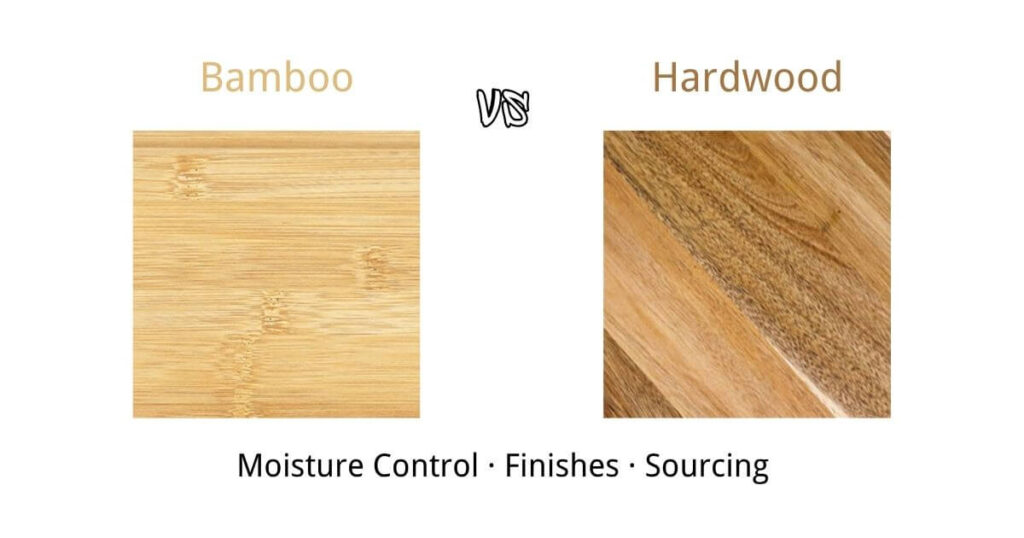
The comparison buyers ask about most often is bamboo vs. hardwood—and the answer depends less on the material itself than on how each substrate is treated, finished, and specified for its care environment.
This guide uses the bamboo vs. hardwood comparison as the entry point, then moves into moisture content control and product-level finish configurations. A purchase order needs to specify at least three separate layers: substrate treatment, surface finish, and care configuration. Confusing these layers is one of the most common reasons bamboo programs fail in the field—boards crack, bath accessories develop black spots, or storage units arrive with a finish that does not match the target market’s expectation.
1. Bamboo vs. Traditional Hardwood: What Buyers Should Compare
Bamboo is a grass, not a timber species. That botanical difference shapes every downstream decision.
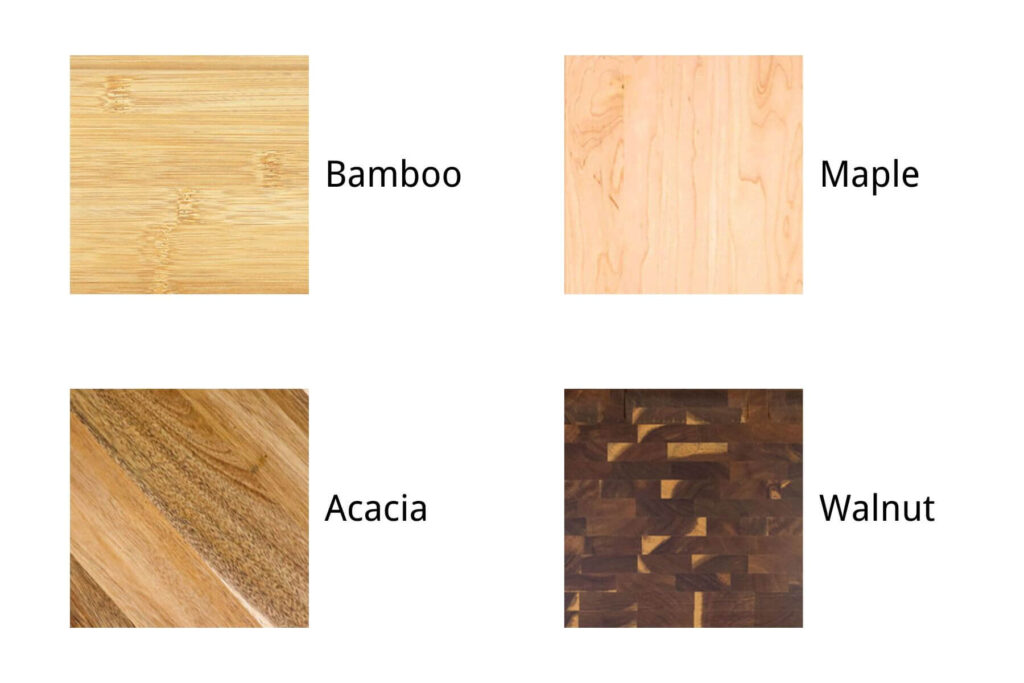
| Feature | Bamboo (Moso, commercial grade) | Traditional Hardwood (Acacia / Maple / Walnut) |
|---|---|---|
| Growth cycle | 3–5 years | 30–50+ years |
| Janka hardness | Often comparable to or above red oak, depending on species and pressing method | Varies widely by species and grain orientation |
| Fiber structure | Dense longitudinal fibers; high tensile and bending resistance | Grain direction matters; anisotropic |
| Water response | Porous; swells and shrinks with MC changes | Porous; species-specific tannin and oil content affects finishing |
| Typical B2B use | Cutting boards, bath accessories, storage, shelving, small furniture | Feature furniture, structural components, premium grain-driven pieces |
Bamboo’s commercial advantages are well established: rapid renewability, lower raw-material loss in strip and lamination processes, and a hardness-to-weight profile that suits high-use kitchen and bath products. Moso bamboo in particular is uniform enough for industrial lamination, which is why it dominates commercial cutting board and storage manufacturing.
Where hardwood still wins: applications where a specific grain figure, a particular structural span, or a market’s entrenched preference for “solid oak” or “acacia” overrides bamboo’s sustainability and cost story. The correct sourcing answer is rarely “bamboo is always better.” It is “match the substrate to the product’s load, moisture exposure, price band, and compliance scope.”
On the wood side, clear lacquer or tinted lacquer is the common factory finish, with the primer and sealer selected per species. Acacia, maple, and walnut behave differently because of tannin content, natural oils, and absorption rates; a single primer/sealer system should not be assumed to work across species.
2. Carbonization, Natural Color & Surface Finishes: Three Decisions, Not One
Carbonization, natural color, and lacquer are often treated as three interchangeable “color options.” They are not. They sit at different levels of the product specification.
Carbonization changes the substrate. Natural color is a substrate state, not a finish. The factory finish—oil, clear lacquer, tinted lacquer, or wood wax oil—is applied afterward. A purchase order should specify all three separately.
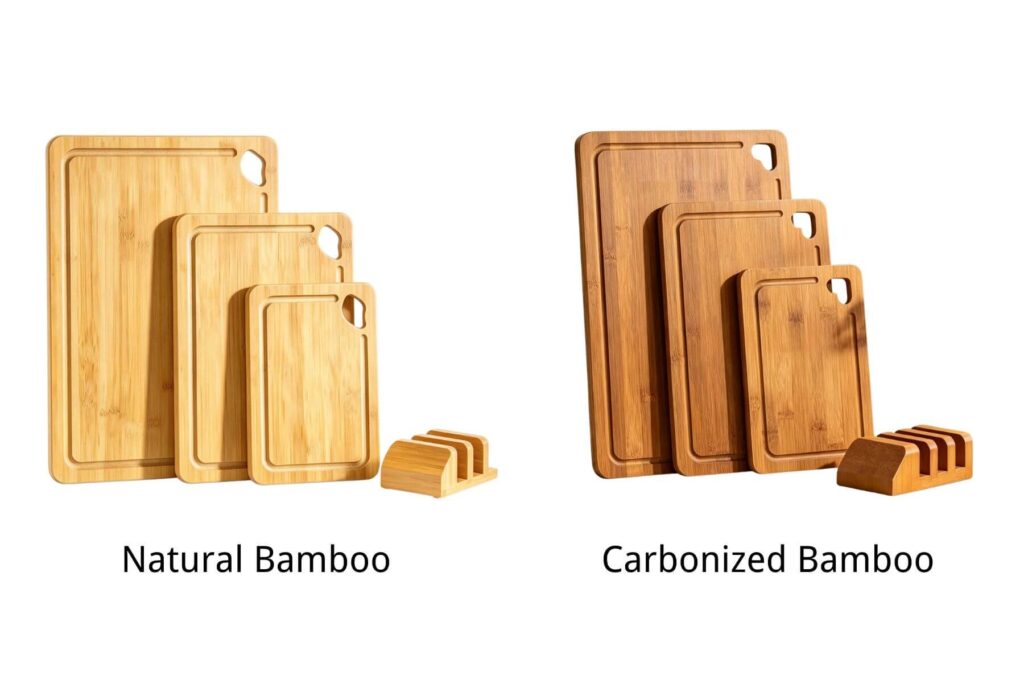
Carbonization is a thermal treatment applied to bamboo strips before lamination. It reduces the nutrients mold and insects can use, lowers the substrate’s moisture affinity, and produces the amber/coffee tone associated with carbonized bamboo. It does not make bamboo waterproof, and it does not replace MC control. For bath accessories, deep carbonization is common; for dry-service storage, natural or lightly carbonized bamboo with a clear lacquer finish is often sufficient. The practical point for buyers is simpler than the process itself: specify the substrate state, the finish, and the care environment as three line items, not one color code.
In the same way, “uncoated” and “lacquered” are two different configuration families, not better-or-worse options. Some buyers specify uncoated bamboo for a more natural feel; others require a sealed PU/UV system for liquid contact. The right configuration depends on the product’s actual exposure, not on a universal “best” finish.
3. Surface Finishes by Product Type: One System Does Not Fit All
Surface finish is where bamboo product categories diverge most sharply. The same factory may run four different finish configurations for four different SKUs, and each configuration has a different set of performance boundaries.
3.1 Cutting boards: oiled cutting face, sealed back and edges
A bamboo cutting board cannot be treated like a decorative panel. The cutting face must remain bare bamboo with an oil finish only. If a film-forming lacquer is applied to the cutting surface, knife contact will chip the coating and create contamination risk. Standard manufacturing practice therefore leaves the cutting face unlacquered and applies lacquer only to the back and edges.
Default hand-wash configuration: a food-contact-safe penetrating oil finish on the cutting face, with the back and edges sealed. The oil preserves the natural texture and provides a baseline moisture-repellent surface, but it wears with repeated washing. Hand-wash only.
Wood wax oil option: when a buyer specifically requires a non-lacquered surface across the whole board, wood wax oil can be specified instead of the standard oil finish. It is a buyer-specified option, not the factory default.
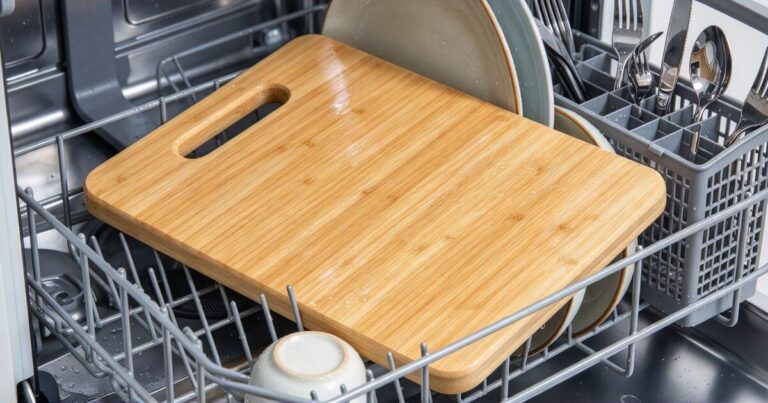
Household dishwasher-specified configuration: a water-resistant adhesive system combined with a water-based sealer and two topcoats on the back and edges only. The topcoat grade is selected for the expected wash environment and may differ from the standard hand-wash topcoat. This configuration is buyer-specified, not the default.
Two boundaries must be stated clearly in any B2B specification: household dishwasher compatibility is not commercial dishwasher suitability, and even a dishwasher-specified board must be removed promptly after the cycle and never left soaking.
For the full finish comparison, adhesive selection logic, and dishwasher boundary conditions, see our hand wash vs. dishwasher-safe cutting board finish guide.
3.2 Bath accessories: sealed and uncoated configurations
Bamboo lotion dispensers, soap dishes, toothbrush cups, and bath trays face a different challenge: sustained high humidity and direct water contact, often with soap residue. In this category, surface finish is not decorative—it is the primary moisture barrier.
The standard configuration for sealed bath accessories is deep-carbonized bamboo substrate + a full-surface food-grade or eco-friendly water-based PU/UV sealing system. For dispensers and pump bottles, an internal liner (plastic or stainless steel) separates the liquid product from the bamboo casing and prevents wicking at the neck and base.
Uncoated bath accessories follow a different logic. Without a surface barrier, the product depends on final MC being controlled to the buyer’s specified limit—8% where required, otherwise the standard ≤11%—plus denser substrate selection, sealed end grain, and structural design that keeps water away from joints and the base. These products are viable for splash and ambient humidity, but they are not designed for prolonged immersion, and the buyer’s care instruction must state that clearly.
A critical limitation applies to both configurations: a bamboo bath accessory is resistant to splashes and ambient humidity, but it is not designed for prolonged immersion. Even a well-sealed bamboo soap dish will degrade if water is allowed to pool continuously on its surface.
3.3 Storage boxes and shelving: clear lacquer as the full-surface finish
Storage boxes, desktop organizers, and shelving units are typically dry-service or semi-humid indoor products, and this changes the finish logic completely.
Because there is no knife contact and no requirement for a bare functional surface, storage and shelving use a full-surface film-forming finish on all exposed faces—interior and exterior. Clear lacquer is the standard factory finish for this category. Matte lacquer and matte water-based PU/UV are common specifications within that family, chosen for sheen control and retail consistency. Matte finishes are particularly common for modern retail and hospitality programs because they suppress glare, retain the visual texture of the bamboo grain, and pair well with minimalist and Scandinavian-influenced interiors.
Why clear lacquer works here: it closes the bamboo pores on all faces, slows moisture exchange with ambient air, and provides a wipe-clean surface. For storage boxes, interior coating also helps with dust and stain resistance. For shelving, a matte PU or UV-cured coating adds wear resistance and protects against incidental water contact—provided the unit is not placed in a permanently wet environment.
Wood wax oil is not the default for storage. It is used when a buyer specifically requests a non-lacquered, more tactile surface. In that case, the product is positioned as a dry-service, low-exposure item, and the care instruction should reflect that.
What any finish cannot solve: it does not convert a dry-service storage unit into a bathroom-grade product, and it does not replace substrate MC control. A well-finished storage box made from poorly dried bamboo will still move, warp, or develop joint separation after transit and acclimation.
| Product category | Substrate | Typical finish configuration | Functional boundary |
|---|---|---|---|
| Hand-wash cutting board | Natural or lightly carbonized | Food-safe oil on cutting face; back/edges sealed; wood wax oil available on buyer request | Hand-wash; re-oil reference |
| Household dishwasher board | Carbonized | Water-resistant adhesive + back/edge sealer + two topcoats; cutting face oiled, not lacquered | Household only; no soaking; not commercial |
| Sealed bath dispenser / soap dish | Deep carbonized | Full-surface water-based PU/UV; internal liner where applicable | Splash-resistant; not for immersion |
| Uncoated bath accessory | Low-MC, denser substrate | No film; sealed end grain and joints | Splash and ambient humidity only |
| Storage box / organizer | Natural or carbonized | Clear lacquer (matte or gloss) on all faces; wood wax oil only on buyer request | Dry indoor use |
| Shelving / rack | Carbonized or natural, cross-laminated | Clear lacquer or matte PU/UV on all faces | Dry to semi-humid indoor use; not outdoor-exposed |
| Pure black / uniform dark product | May or may not be carbonized | Dye, tinted lacquer, or opaque coating | Color source must be specified separately |
4. Moisture Content Control: The Backbone of Export Quality
If substrate treatment and surface finish set the product’s baseline, moisture content control determines whether the finished product leaves the factory in a stable state.
Bamboo and wood are porous, hygroscopic materials. They swell when they gain moisture and shrink when they lose it. This behavior cannot be eliminated by surface coating. It can only be managed.
Factory control targets: bamboo substrates are dried and conditioned to ≤11% MC; wood substrates to ≤10% MC. A lower figure—8%—is achievable and is sometimes specified for dry destination markets, tight-tolerance programs, or uncoated bath products, but it should be treated as a buyer-specified option, not the default for every order. Driving MC too low without matching the destination humidity can create a different risk: the material may absorb moisture rapidly on arrival and move in the opposite direction.
That distinction matters most when a buyer specifies a lower MC limit. When 8% is requested for an uncoated product, that figure is an ex-factory state, not a service-life guarantee. Once the accessory is exposed to bathroom humidity or repeated water contact, it will gradually re-absorb moisture. A lower MC buys time and reduces initial mold risk; it does not replace substrate selection, joint sealing, or a clear care boundary.
Why this matters for ocean freight: a 30–45 day sea voyage exposes cargo to diurnal temperature swings inside the container. When container air cools, relative humidity rises; when it warms, moisture migrates. Bamboo’s lignocellulosic substrate can support mold spore germination when sustained RH exceeds roughly 72%, and even kiln-dried stock with uncontrolled residual moisture can develop visible fungal colonies in transit.
A practical export protocol includes:
- incoming batch MC inspection with a pin-type meter; stock above the upper limit is segregated and re-dried;
- a secondary conditioning or dehumidification cycle after lamination and before finishing, to reduce trapped bound moisture;
- post-finishing equilibration under controlled warehouse RH;
- pre-pack final MC spot checks;
- high-barrier inner bags, calibrated desiccant deployment by carton volume, and container-level desiccant strips for long transit.
For buyers, the takeaway is that MC control is not a single drying step. It is a chain, and every link—raw strip, laminated panel, finished component, packed carton—has a specification. Rapid moisture loss is also the primary reason standard bamboo cutting boards can fail under extreme heat; see our dishwasher-safe cutting board finish guide for the thermal-shock and finish-boundary details.
5. Commercial Applications: Matching Substrate, Finish, and Care
5.1 Kitchenware: cutting boards and serving boards
The pain points are warping, deep knife gouges, edge splitting, and mold at glue lines. The factory solution is a combination of high-density pressing, food-contact-compliant adhesive systems, and the correct finish configuration for the declared care requirement. Flat, smooth cutting surfaces without deep juice grooves are easier to sanitize and less likely to trap fiber debris. FDA/LFGB compliance should be verified on the finished product through migration testing, not assumed from a raw-material certificate.
If you need a production-ready dishwasher-safe bamboo cutting board with a buyer-specified adhesive and back/edge finish system, our factory-direct option starts at 500 pcs.
5.2 Bathroom: dispensers, soap dishes, and vanity accessories
The pain point is sustained humidity and soap residue causing black surface mold and edge wicking. For sealed configurations, the solution is deep carbonization at the substrate level, full-surface water-based PU/UV sealing, and mechanical design that keeps liquid away from end grain and joint lines. For uncoated configurations, the solution is a lower final MC where specified, denser substrate selection, sealed joints and base, and a care instruction that keeps the product out of standing water.
5.3 Storage and shelving: lacquered dry-service products
The pain points are load deflection, joint separation, and surface wear. Cross-laminated bamboo construction distributes load across multiple fiber directions and improves panel rigidity. Clear lacquer or matte PU/UV on all faces provides a consistent retail finish, wipe-clean maintenance, and moderate moisture resistance. This category should be specified as dry-service indoor furniture unless the construction and sealing have been explicitly upgraded for humid zones.
6. B2B Buyer FAQ
Is carbonized bamboo waterproof?
No. Carbonization reduces moisture affinity and improves stability, but bamboo remains hygroscopic and still needs MC control and appropriate care.
Are dark bamboo products always carbonized?
No. Amber and coffee tones usually come from carbonization; uniform black or opaque dark finishes usually come from dye or tinted lacquer. Specify the color source separately from the finish.
Why are storage boxes usually lacquered instead of oiled?
Clear lacquer is the standard factory finish for storage and shelving because it seals all exposed faces, provides a wipe-clean surface, and gives a consistent sheen for retail. Matte lacquer is a common specification when a low-sheen look is required. Wood wax oil is used only when a buyer specifically requests a non-lacquered, more tactile surface.
Can a bamboo cutting board go in the dishwasher?
Only if it has been specified for household dishwasher use with a water-resistant adhesive and back/edge sealing. The cutting face remains oiled, not lacquered. Commercial dishwashers are not suitable. See our full dishwasher compatibility guide for the finish-level boundaries.
Why is bamboo MC controlled to ≤11% and wood to ≤10%?
These are the factory control windows for our standard production, not universal industry constants. They reflect the typical equilibrium range for laminated bamboo and wood components before export, while leaving enough moisture margin for transit and destination acclimation. Lower targets such as 8% are possible when a buyer specifies them, but they should be set against the destination climate and product structure.
How do you prevent mold during ocean freight?
Through the full chain: incoming MC inspection, secondary conditioning, pre-pack checks, high-barrier inner packaging, volume-calculated desiccants, and container-level humidity control. No single desiccant bag compensates for wet goods at packing.
What certifications should a bamboo OEM supplier hold?
FSC for responsible sourcing, BSCI or equivalent for social compliance, ISO 9001 for quality systems, and FDA/LFGB finished-product migration testing where food contact is claimed. Certificates should be verified at the finished-product level for compliance claims.